


Get Latest [Dec-2025] Conduct effective penetration tests using GetValidTest KCNA
Penetration testers simulate KCNA exam PDF
Linux Foundation KCNA (Kubernetes and Cloud Native Associate) Exam is a certification program designed to test one's knowledge and skills in the field of Kubernetes and Cloud Native technologies. Kubernetes and Cloud Native Associate certification is globally recognized and is a valuable asset for professionals looking to advance their careers in the cloud computing industry. KCNA exam covers a wide range of topics including Kubernetes architecture, deployment, networking, security, and troubleshooting. It also covers cloud-native technologies such as containerization, microservices, and serverless computing.
Linux Foundation KCNA (Kubernetes and Cloud Native Associate) Exam is a certification program designed to validate the skills and knowledge of professionals who work with cloud-native technologies such as Kubernetes. The program is offered by the Linux Foundation, a non-profit organization that is dedicated to promoting the growth of Linux and open-source software.
NEW QUESTION # 119
What is the command used to login to the pod?
- A. kubectl list
- B. kubectl get
- C. kubectl exec
- D. kubectl login
Answer: C
Explanation:
https://kubernetes.io/docs/reference/generated/kubectl/kubectl-commands#exec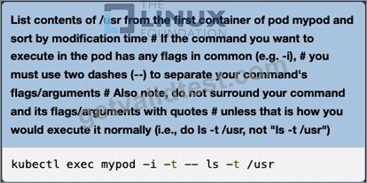
NEW QUESTION # 120
Consider the following scenario: You are using GitOps with ArgoCD to manage a deployment in your Kubernetes cluster. You modify a configuration file in your Git repository, but the change is not reflected in the cluster. What are the possible reasons for this issue?
- A. The deployment configuration in the Git repository is invalid or does not match the desired state.
- B. The ArgoCD application is not properly configured to watch the specific Git repository for changes.
- C. The Kubernetes cluster is not accessible by ArgoC
- D. The ArgoCD server is not running or is not properly configured.
- E. The Git repository is not accessible by ArgoCD.
Answer: A,B,C,D,E
Explanation:
All of the listed options could potentially cause a change in the Git repository not to be reflected in the cluster. A: ArgoCD must be running and configured correctly to monitor the repository for changes. B: ArgoCD needs access to the repository to fetch the configuration. C: An invalid or incorrect configuration in the repository would prevent ArgoCD from applying the desired changes. D: ArgoCD must be able to communicate with the Kubernetes cluster to apply the configuration. E: The specific application in ArgoCD needs to be configured to monitor the correct repository and namespace. Identifying the specific issue requires troubleshooting the configuration and the system's connectivity.
NEW QUESTION # 121
What is the primary function of the Kubernetes control plane?
- A. Manages the lifecycle of Pods, ensuring that they are running as intended.
- B. Provides a central point of control and management for the Kubernetes cluster.
- C. Enables communication between Pods and services within a Kubernetes cluster.
- D. Provides a secure and reliable connection between the Kubernetes control plane and nodes.
- E. Schedules Pods to nodes based on resource availability and node affinity
Answer: B
Explanation:
The Kubernetes control plane is responsible for managing the overall state and behavior of the cluster- It provides a central point of control, ensuring that all components are running as expected and that the cluster is operating efficiently.
NEW QUESTION # 122
A ________ is a ready-to-run software package, containing everything needed to run an application.
- A. Container Image
- B. Container Runtime
- C. Container Repository
- D. Docker
Answer: A
Explanation:
https://kubernetes.io/docs/concepts/containers/#container-images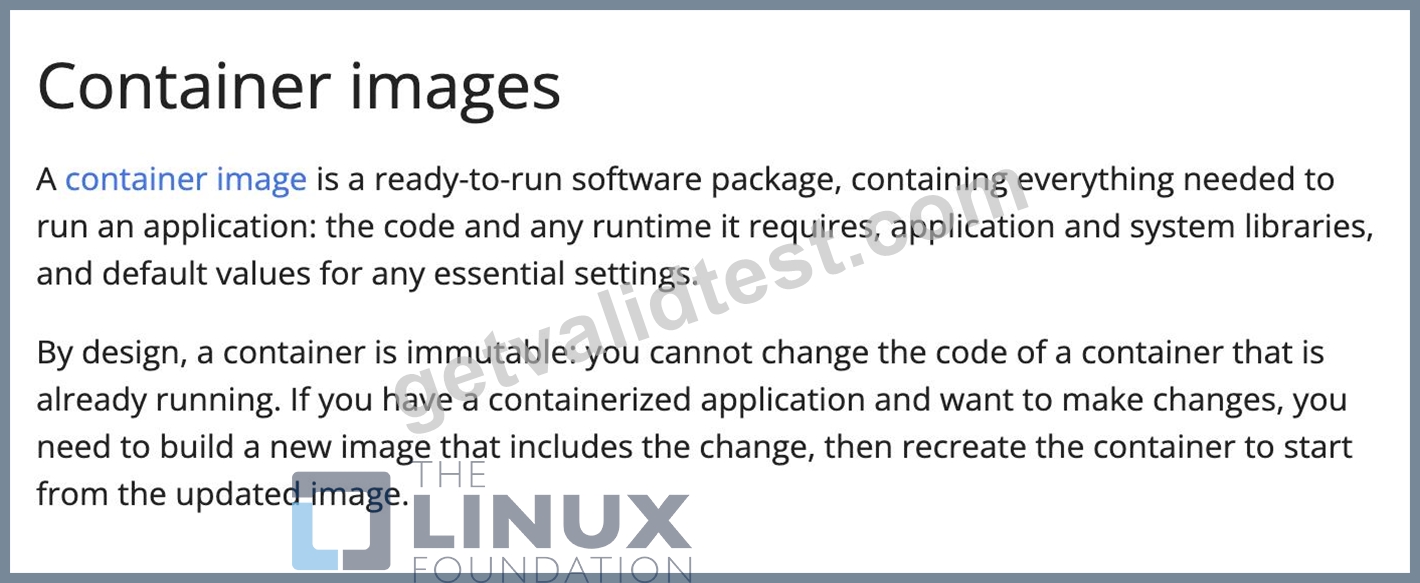
NEW QUESTION # 123
What is the command used to scale the application?
- A. kubectl scale
- B. kubectl explain
- C. kubectl run
Answer: A
Explanation:
https://kubernetes.io/docs/reference/generated/kubectl/kubectl-commands#scale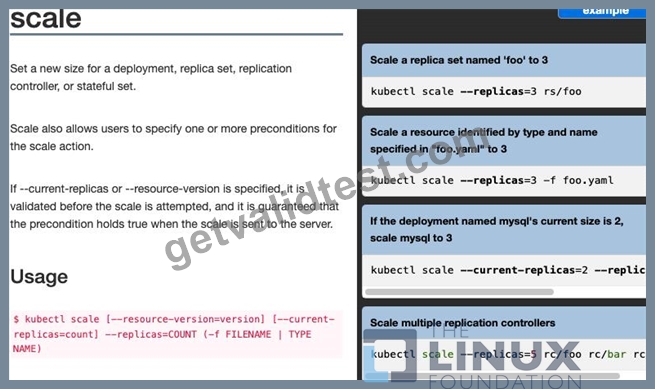
NEW QUESTION # 124
Consider the following Kubernetes YAML file representing a deployment: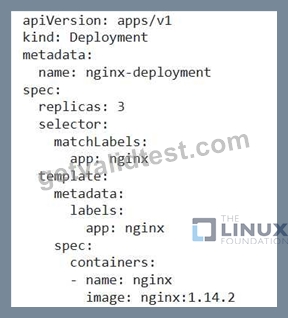
What is the primary benefit of using a GitOps approach to manage this deployment compared to traditional methods?
- A. GitOps simplifies the process of managing complex Kubernetes deployments by providing a centralized repository for configuration.
- B. GitOps automates the deployment process, eliminating the need for human intervention.
- C. GitOps enhances security by preventing unauthorized changes to the Kubernetes cluster.
- D. GitOps provides faster deployment times by eliminating the need for manual interventions.
- E. GitOps enables easy rollbacks to previous deployments by leveraging the versioning capabilities of Git.
Answer: E
Explanation:
GitOps leverages Git's version control system, providing a history of changes to your cluster's configuration. This enables easy rollbacks to previous deployments by simply reverting to a specific commit in the Git repository, making it easier to recover from errors or unwanted changes.
NEW QUESTION # 125
Explain the concept of "histogram" metrics in Prometheus and provide an example of when they would be beneficial for monitoring.
- A. Histogram metrics are used to create custom dashboards with interactive elements for visualizing data.
- B. Histogram metrics are used for storing and retrieving time series data in a compressed format, optimizing storage space.
- C. Histogram metrics are only applicable to monitoring Kubernetes clusters, not for general system monitoring.
- D. Histogram metrics are designed to track changes in metric values over time, providing a historical view of performance trends.
- E. Histogram metrics provide a detailed distribution of values for a specific metric, allowing for analysis of performance bottlenecks or outlier behavior.
Answer: E
Explanation:
Histogram metrics provide a distribution of values for a metric. This is beneficial for monitoring scenarios where you want to understand the spread of values, such as response times of a web service. You can use the histogram to see how many requests fall within different response time buckets, helping identify performance bottlenecks or outlier requests. Histogram metrics can help identify performance issues that might not be evident with a simple average or sum metric.
NEW QUESTION # 126
Which of the following components is part of the Kubernetes control panel
- A. kubelet
- B. Service Mesh
- C. Cloud control manager
- D. kube-proxy
- E. kubectl
Answer: C
Explanation:
https://kubernetes.io/docs/concepts/overview/components/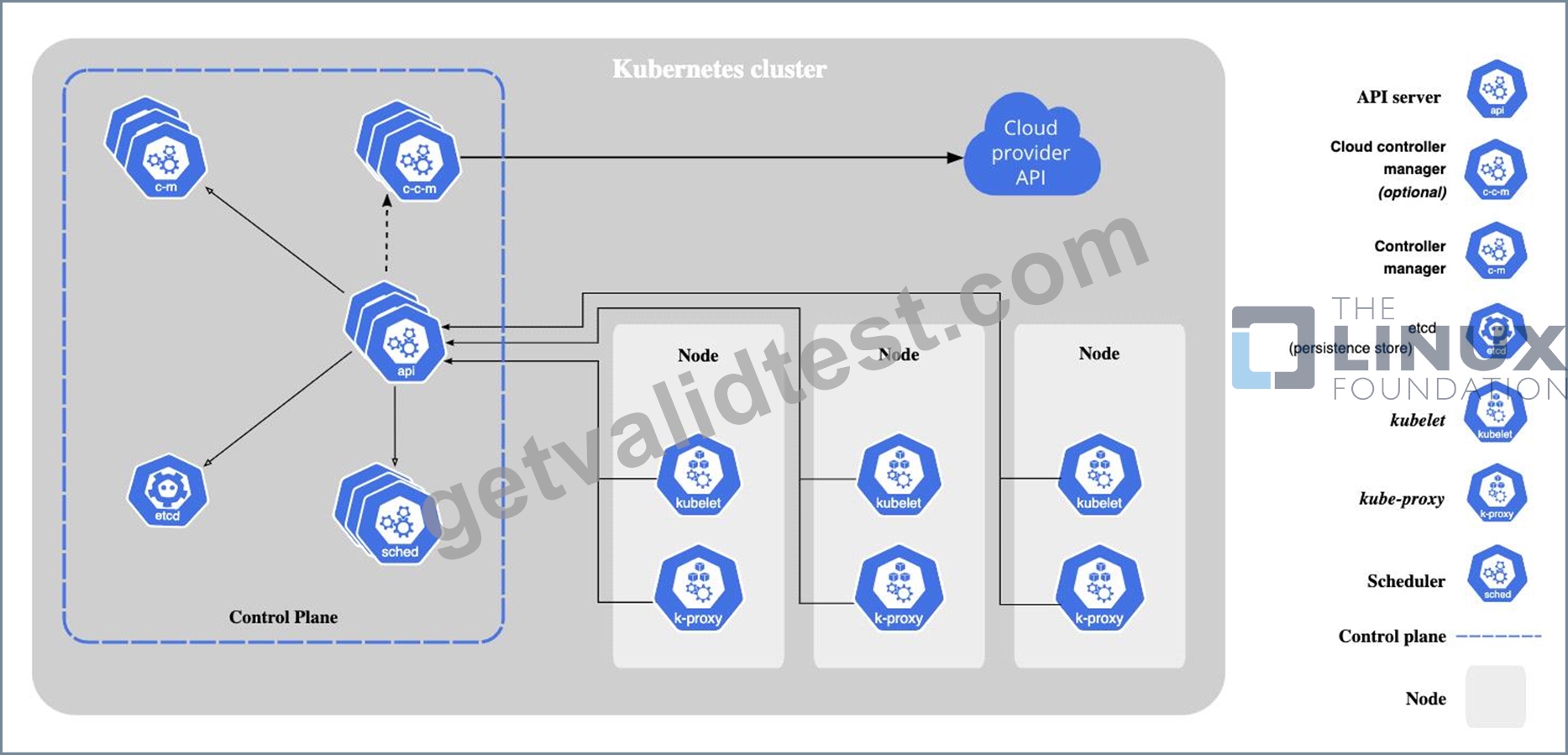
NEW QUESTION # 127
Which authentication method allows JWTs to authenticate?
- A. OpenId connect
- B. Client 'TLS' certificates
- C. Anonymous
- D. OPA gatekeeper
Answer: A
NEW QUESTION # 128
You are building a cloud-native application that uses a combination of Kubernetes, Istio, and Prometheus. You want to ensure that your application's logs, metrics, and traces are correlated for easy troubleshooting. What approach would you take to achieve this correlation?
- A. Use a custom logging agent to collect logs and forward them to Prometheus.
- B. Use the •kubectl logs* command to retrieve logs from individual pods and manually correlate them with metrics and traces.
- C. Use a centralized logging system like Fluentd to collect logs from Kubernetes and forward them to Prometheus.
- D. Configure Istio to capture logs from pods and forward them to Prometheus.
- E. Integrate Jaeger with Istio and Prometheus using the Istio Mixer to enrich tracing data with metrics and log information.
Answer: E
Explanation:
The correct answer is B . Istio's Mixer allows you to integrate Jaeger with Istio and Prometheus. This integration enables you to enrich tracing data with relevant metrics and log information captured from Istio's traffic management capabilities. This approach provides a unified platform for correlating logs, metrics, and traces. The other options are not as effective for achieving correlation: A : This approach focuses only on logs and does not provide a way to link logs to metrics or traces. C : While Istio can capture logs, sending them to Prometheus is not an ideal solution for correlation. D : A centralized logging system like Fluentd can collect logs, but it does not inherently provide mechanisms to correlate them with metrics or traces. E : Manually correlating logs, metrics, and traces using 'kubectl logs is tedious and prone to errors, especially in a dynamic environment like Kubernetes.
NEW QUESTION # 129
You are using a Kubernetes deployment to run a web application. You want to roll out a new version of the application with minimal downtime. Which strategy can be used to achieve this?
- A. RollingUpdate
- B. Canary
- C. Immutable
- D. BlueGreen
- E. Recreate
Answer: A,B,D
Explanation:
RollingUpdate, BlueGreen, and Canary are all strategies that can be used to roll out new application versions with minimal downtime. RollingUpdate updates Pods one by one, ensuring that there are always healthy Pods running. BlueGreen creates two separate environments, one for the old version and one for the new version, and then switches traffic over to the new environment. Canary gradually rolls out the new version to a small subset of users before making it available to everyone. Option 'A' (Recreate) would completely stop the old Pods before creating new ones, which could lead to downtime. Option 'E' (Immutable) is not a deployment strategy for rolling out updates.
NEW QUESTION # 130
You have a Kubernetes cluster running on Google Kubernetes Engine (GKE). Your application requires persistent storage for its dat
a. Which GKE feature would you use to provision persistent volumes for your pods?
- A. PersistentDisk
- B. StatefulSet
- C. PersistentVolumeClaim
- D. PodDisruptionBudget
- E. NodePort
Answer: C
Explanation:
PersistentVolumeClaim (PVC) is the primary mechanism for requesting persistent storage in Kubernetes. It allows pods to request a specific amount of storage with desired access modes (Read-Only, ReadWriteOnce, ReadWriteMany). GKE integrates with PVCs to provision persistent volumes from underlying storage solutions like Google Cloud Persistent Disks.
NEW QUESTION # 131
What is the primary role of the kubelet in the Kubernetes runtime environment?
- A. Scheduling pods to nodes based on resource availability.
- B. Ensuring that pods are running as specified in their YAML files.
- C. Maintaining the health of the Kubernetes master node.
- D. Managing the network connectivity for pods in the cluster.
- E. Managing the communication between nodes in the cluster.
Answer: B
Explanation:
The kubelet is responsible for ensuring that pods are running as specified in their YAML files. It monitors the containers within a pod, restarts them if they fail, and manages the resources allocated to the pod. The kubelet is a crucial component of the Kubernetes runtime environment, ensuring that pods are running correctly and as expected.
NEW QUESTION # 132
You are running a large-scale, microservice-based application in Kubernetes, and you are using HorizontalPodAutoscalers (HPAs) for automatic scaling. Which of the following statements about resource utilization monitoring in this scenario is true?
- A. It is essential to monitor resource utilization at both the Pod and namespace levels to get a comprehensive view of resource usage and optimize scaling
- B. Monitoring resource utilization at the Pod level provides sufficient insights for overall application health and scaling decisions-
- C. Monitoring resource utilization at the node level is sufficient for scaling individual microservices.
- D. Resource utilization monitoring is not critical in Kubernetes as the system automatically manages resource allocation and scaling.
- E. Monitoring resource utilization is only necessary during peak load periods, not during normal operations.
Answer: A
Explanation:
Monitoring resource utilization at both the Pod and namespace levels provides a comprehensive understanding of resource usage. Monitoring Pods allows you to identify resource-intensive services and fine-tune their scaling behavior. Monitoring namespaces helps you understand the overall resource consumption and optimize scaling across the entire application. This is crucial in large-scale microservice deployments where resources can be easily exhausted if not carefully monitored
NEW QUESTION # 133
What is the primary interface for Kubernetes cluster?
- A. Control Plane
- B. Kubelet
- C. YAML
- D. Kubernetes Api
- E. JSON
Answer: D
Explanation:
https://kubernetes.io/docs/concepts/overview/components/#kube-apiserver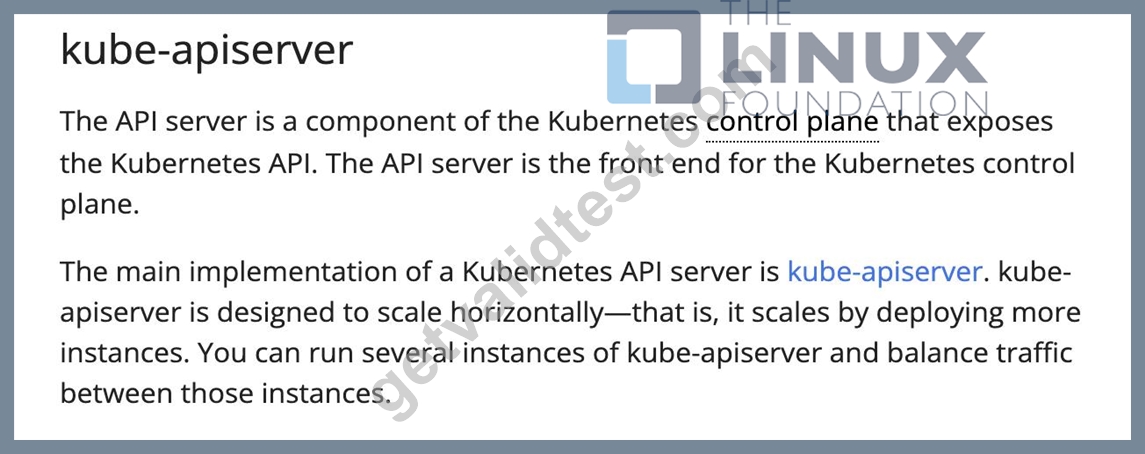
NEW QUESTION # 134
You are running a Kubernetes cluster in a public cloud environment. Which of the following security best practices is MOST important for protecting your cluster against external threats?
- A. Disabling Kubernetes RBAC and granting full access to all users.
- B. Deploying all applications in the same namespace.
- C. Deploying the Kubernetes control plane in a public subnet.
- D. Running all containers with the '-privileged' flag enabled.
- E. Using a network firewall to restrict access to the Kubernetes API server.
Answer: E
Explanation:
Using a network firewall to restrict access to the Kubernetes API server is crucial for protecting your cluster against external threats in a public cloud environment. By limiting access to the API server to authorized users and services, you can significantly reduce the risk of unauthorized access and malicious attacks.
NEW QUESTION # 135
You are using Prometheus to monitor a Kubernetes cluster and want to create an alert that triggers when the number of failed deployments in a specific namespace exceeds a certain threshold. Which Prometheus query can help achieve this?
- A.

- B.

- C.

- D.

- E.

Answer: C
Explanation:
The query •sum(kube_deployment_status_replicas_unavailable{namespace=""} 1) > 5' focuses on the 'replicas_unavailable' metric for deployments in the specified namespace. It counts deployments where the unavailable replica count is 1 , effectively indicating failed deployments. If this count exceeds 5, the alert will trigger.
NEW QUESTION # 136
You are implementing a GitOps workflow for a complex application with multiple microservices. To manage dependencies between these microservices and ensure their correct deployment order, which approach would be most suitable?
- A. Use a single Git repository for all microservices and define deployment dependencies using Helm charts.
- B. Use a separate Git repository for each microservice and manually coordinate their deployments.
- C. Use a separate Git repository for each microservice and configure a CIICD pipeline to manage their dependencies.
- D. Use a single Git repository for all microservices and leverage a GitOps tool like ArgoCD or Flux to manage dependencies with features like resource dependencies and deployment order.
- E. Use a Kubernetes Operator to automate the deployment and management of the microservices, ensuring their dependencies are met.
Answer: D
Explanation:
Option C provides the most suitable approach for managing dependencies between multiple microservices in a GitOps workflow. Using a single repository for all microservices and leveraging a GitOps tool like ArgoCD or Flux allows you to define resource dependencies and specify the deployment order for microservices, ensuring a consistent and predictable deployment process.
NEW QUESTION # 137
You have a Kubernetes cluster with multiple nodes. You want to ensure that your application Pods are evenly distributed across these nodes. Which Kubernetes feature should you use for this purpose?
- A. HorizontalPodAutoscaler
- B. Deployment
- C. NodeSelector
- D. Service
- E. PodDisruptionBudget
Answer: C
Explanation:
NodeSelector allows you to specify labels that your Pods must match in order to be scheduled on a specific node. By using NodeSelector, you can distribute your Pods across different nodes based on their resources, location, or any other criteria you define.
NEW QUESTION # 138
......
Tested Material Used To KCNA Test Engine: https://troytec.getvalidtest.com/KCNA-brain-dumps.html